
Who Has the Upper Hand in Today's Housing Market?Ask around and almost every homebuyer out there wants to know if there’s a way to get a better deal. And just about every seller wants to know

Dated: July 1 2025
Views: 153
Published on June 17, 2025
After you have an accepted purchase offer, you still have a long list of to-do’s and potential deal breakers to avoid.

Buying a home is like a marriage, beginning with a proposal and leading up to a big, life-changing day. First, you have to find a home you love and make a commitment — that is, a strong real estate purchase offer, which the seller could accept, counter, or reject. Even after you have an accepted real estate purchase agreement, however, you’ll have plenty to do. The good news is your real estate agent will help you stay on track to avoid problems that could jeopardize the closing and the deal.
“Just because the contract is signed doesn’t mean the deal is done,” says April Emory, real estate professional with Emorys Rock Realty in Wesley Chapel, Fla. “There are a few hurdles that can pop up.” Those include home inspection issues, financing obstacles, mortgage approval hurdles, or an appraisal that comes in too low.
When a real estate purchase agreement is in place, Cari McGee, managing broker at RE/MAX Northwest in Kennewick, Wash., sends buyers a long list of next steps before closing to educate them about the importance of meeting each deadline.
A real estate purchase agreement, also known as a sales contract, is a written document outlining the terms and conditions of a home sale. It’s the buyer’s contract for the home purchase and is legally binding only when both parties have signed it.
Contingencies are like safety nets for buyers, says Emory. “They allow you to back out of the contract or renegotiate if something significant doesn’t go as expected.” She highlights the most common contingencies included in real estate purchase agreements:
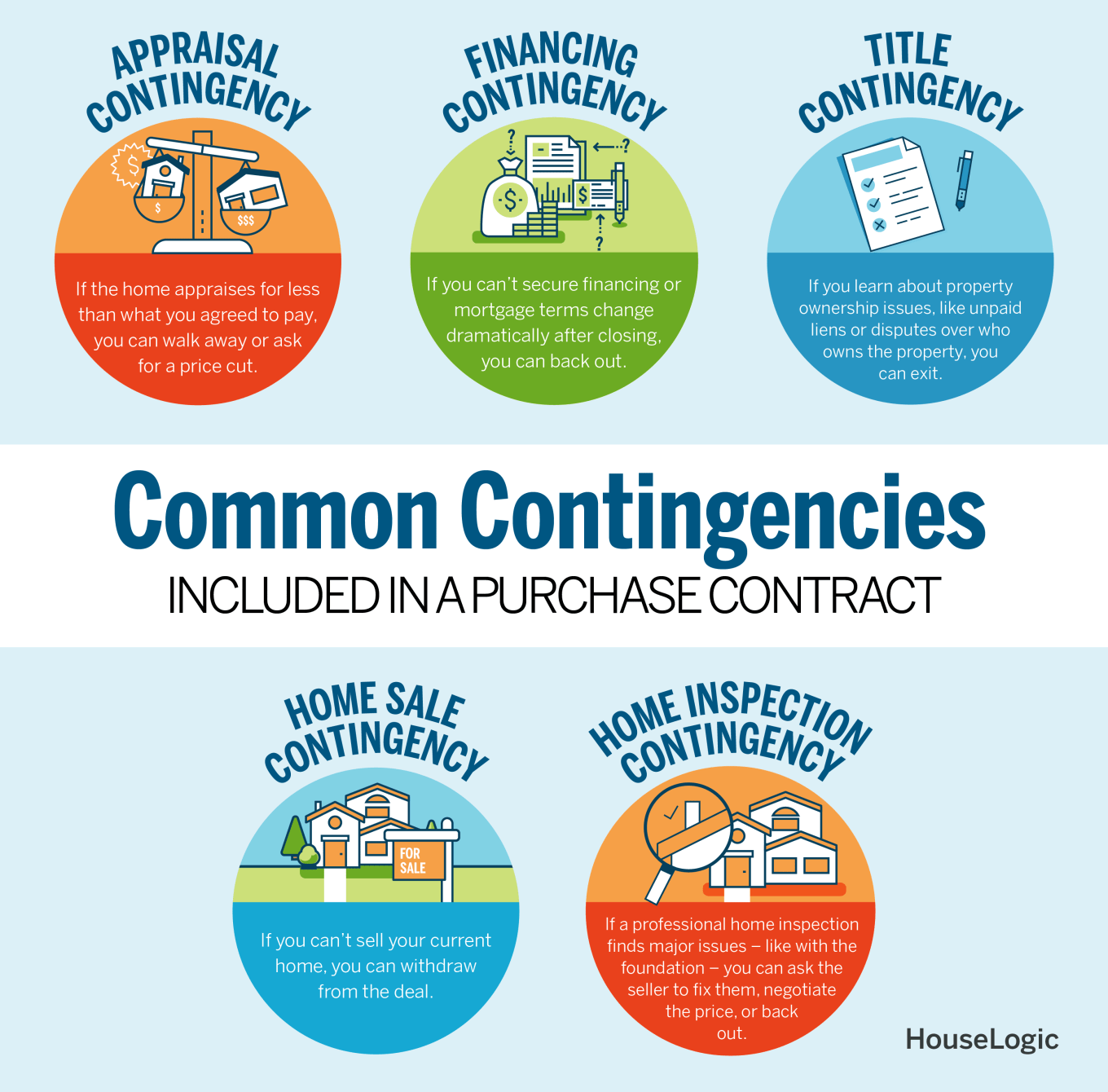
Contracts typically close within 30 to 60 days. In that time, you’ll need to accomplish certain things: resolving contingencies outlined in your purchase contract, meeting contractual deadlines, getting your financing ready, and making sure paperwork is in order.
“[Your agent will] help you navigate the timelines and stay on top of critical deadlines — like when to schedule inspections and meet with the lender, and when your earnest money is due,” Emory says. "If any issues come up, we’ll help you figure out a plan of action and advocate on your behalf.”
Rookie home buyers may be at risk for missteps that could compromise the purchase. Here are eight tips to to help you stay on the right road:
Find one or ask a friend or relative for a recommendation. Your agent will negotiate on your behalf and help you meet critical deadlines in your home purchase.
Lenders will review your finances to make sure you qualify for a mortgage and tell you what you can afford. Being preapproved helps prevent surprises when finalizing your financing after you’ve found a home.
You’ll have contractual deadlines for completing inspections and finalizing your financing. “Even small delays can push back the closing date,” Emory says.
Gathering quotes from multiple lenders could save you on average $212 a month, or $2,547 a year, according to LendingTree.
Loan products like Federal Housing Administration loans or first-time home buyer programs may help you qualify for a mortgage and save money.
Don’t open up new credit cards or make big purchases before closing. This could affect your credit and even make you ineligible for a mortgage.
Factor in closing costs (typically 2% to 5% of the purchase price), the earnest money deposit, property taxes, and homeowners association fees, if applicable. “Things in homes always break down, so people should put aside a budget for anything that will need fixing,” says Lawrence Yun, chief economist at the National Association of REALTORS®. “A rule of thumb is to anticipate 1% or 2% of the home price for potential maintenance.”
Always keep the lines of communication open with your real estate agent, Emory says. “If you’re unsure of anything or need clarification, ask questions. Clear communication can keep everything running smoothly.”

After a legally binding real estate purchase agreement has been signed, about 7% of real estate transactions were terminated before closing, according to the April 2025 REALTORS® Confidence Index Survey, based on thousands of real estate professionals’ transactions nationwide. Sixteen percent of contracts faced delays to settlement.
McGee says the most common reason she sees are flagged items from a home inspection and the fallout. Either a seller refuses to make fixes or the buyer is too demanding about requests for repairs. In one transaction she worked on, home buyers requested light bulbs in a bathroom to be changed to a softer color, McGee adds.
“I always emphasize to my clients the points in a transaction where the sale could fall apart. But I also assure them that if we face any issues, I can guide them on what we can do,” McGee says.
Here are some common reasons a real estate transaction may not reach closing and options to handle the roadblocks.
The appraised value for the home comes in lower than what the buyer agreed to pay. A lender will approve a mortgage for only the appraised amount.
Options include:
No home is perfect, but serious problems —for example, with the home’s foundation or major systems — may concern you enough to renegotiate with the seller.
Options include:
A buyer may be unable to obtain a mortgage to complete the purchase of the home. Sometimes a buyer’s financial situation changes while under contract, such as from a job loss or a sudden medical situation.
Options include:
A title inspection of the home could show unresolved liens or legal disputes over the property’s ownership.
Options include:
Buyers occasionally change their minds about purchasing a home. They may have faced a job relocation, found a house they liked better, been unable to sell their current house, or just fallen out of love with this home.
Options include:
On the flip side, a seller could change their mind. They may have experienced sudden financial trouble, a medical issue, or another situation prompting them to want out of the transaction.
Options include:
While unavoidable situations can sometimes arise, take heart. After a purchase contract is signed, about 95% of transactions are completed. Working with a real estate agent can help improve your chances that any hiccups won’t derail or delay your transaction.
“Your agent knows your contract backward and forward,” McGee says. “They know when you need to get ‘X’ done and then what you need to do next. They’ll keep buyers on timelines and take them where they need to go.” That is, all the way to a happily ever after in their new home.
Interested in more real estate tips? Feel free to contact me directly!
Providing a superior level of informed, professional real estate services to buyers and sellers throughout Central Minnesota. We have agents specializing in residential, commercial, multifamily, new construction, existing, investment properties, foreclosures/REO, and short sales with offices located in:
Multiple Office Locations To Serve YOU!
Saint Cloud 320-259-4554
Princeton 320-983-3555
Sartell 320-259-4554
Little Falls 320-259-4554
Minneapolis 763-565-2000
Hutchinson 320-455-9127
Litchfield 320-298-1140
Premier Real Estate specializes in MANY areas around Central MN including Saint Cloud, Waite Park, Rice, Royalton, Sartell,
Who Has the Upper Hand in Today's Housing Market?Ask around and almost every homebuyer out there wants to know if there’s a way to get a better deal. And just about every seller wants to know
How to Find the Right Neighborhood When You MoveHouse hunters can focus so much on a house they want that they unintentionally slight other aspects of a new location. Your new neighborhood is at
Less House, More Home: Why Smaller Homes Are Paying Off for Today’s BuyersYou started shopping with a specific mental image of your future home in your mind. Then the houses in your budget
Do You Still Need a Home Office?Dedicated home offices are transitioning from must-haves to maybes, as many employees spend more days at the workplace. The home office isn’t disappearing, but
 The data relating to real estate for sale on this web site comes in part from the Broker Reciprocity Program of the Regional Multiple Listing Service of Minnesota, Inc. Real estate listings held by brokerage firms other than Premier Real Estate Services are marked with the Broker Reciprocity logo or the Broker Reciprocity thumbnail logo (little black
house) and detailed information about them includes the name of the listing brokers.
The data relating to real estate for sale on this web site comes in part from the Broker Reciprocity Program of the Regional Multiple Listing Service of Minnesota, Inc. Real estate listings held by brokerage firms other than Premier Real Estate Services are marked with the Broker Reciprocity logo or the Broker Reciprocity thumbnail logo (little black
house) and detailed information about them includes the name of the listing brokers.
The broker providing these data believes them to be correct, but advises interested parties to confirm them before relying on them in a purchase decision.
© 2026 Regional Multiple Listing Service of Minnesota, Inc. All rights
reserved
By searching, you agree to the End User License Agreement.
Digital Millennium Copyright Act (DMCA) Notice
The Digital Millennium Copyright Act of 1998, 17 U.S.C. 512 (the "DMCA"), provides recourse for copyright owners who believe that material appearing on the Internet infringes their rights under U.S. copyright law. If you believe in good faith that any content or material made available in connection with our website or services infringes your copyright, you (or your agent) may send us a notice requesting that the content or material be removed, or access to it blocked. Notices and counter-notices should be sent in writing by mail to Michael Bisping, Director, Customer Relations, Regional Multiple Listing Service of Minnesota, Inc, 2550 University Avenue West, Suite 259S
Saint Paul, MN 55114 or by email to mbisping@northstarmls.com. Questions can be directed by phone to 651-251-3200.
