
Who Has the Upper Hand in Today's Housing Market?Ask around and almost every homebuyer out there wants to know if there’s a way to get a better deal. And just about every seller wants to know

Dated: August 6 2025
Views: 58
Published on July 30, 2025
Explore precautions like sensors and monitors, and steps to take when unhealthy air or wildfire smoke is at your door.
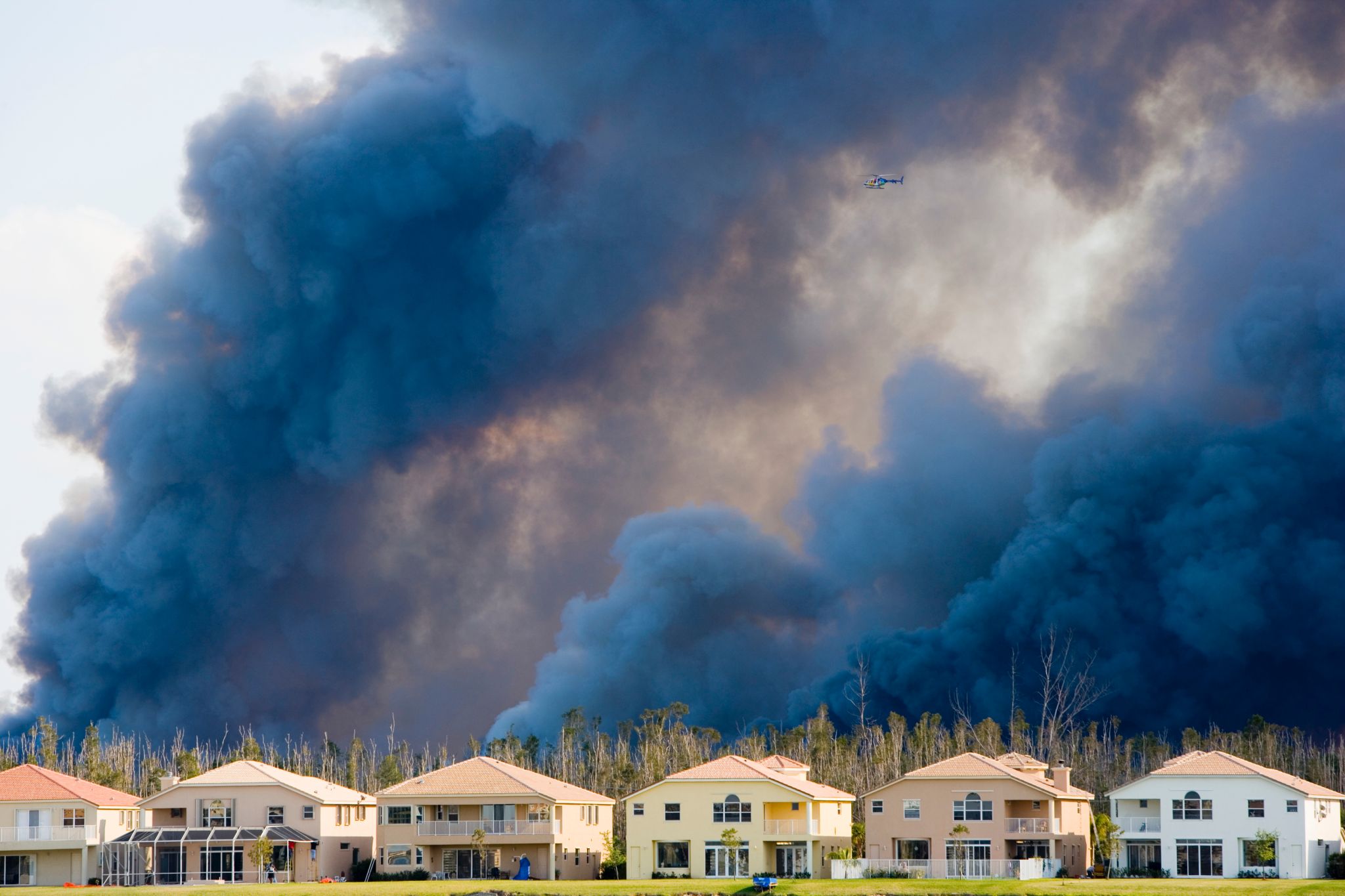
Unhealthy air is blowing more problems into more homes. Nearly 40% of people in the U.S. are living in places with unhealthy levels, and 131 million people were living with air pollution levels that could compromise their health in 2024, according to the American Lung Association. Air pollution causes health problems beyond respiratory issues, including heart attacks and strokes, impaired brain function, and even premature death, the ALA says. We can't control all the causes of air pollution, including all wildfires and climate change. We can protect our homes and families from unhealthy air quality symptoms by acting on air quality alerts and investing in air monitoring and cleaning equipment, and filters.
Pollutants that affect your home and health go beyond wildfire smoke. “Factories, fossil-fuel powered plants, cars and trucks, and all the products people use — like gas-powered lawn mowers and fire pits — create the chronic air pollution we experience day in and day out,” says Brian Urbaszewski, director of environmental health programs at the Respiratory Health Association in Chicago.
Climate change has already led to more frequent wildfires and a longer wildfire season, according to the U.S. Environmental Protection Agency. Wildfire smoke pollutes the air, spreading hundreds of miles downwind to other regions.
Wildfires carry particulate matter that’s so small, 2.5 micrometers, that it can bypass your body’s defenses and enter your bloodstream, cause breathing problems and heart, lung, and brain issues, Urbaszewski says.
If you're wondering how to protect yourself from wildfire smoke health problems, the EPA recommends buying a portable air cleaner or high-efficiency HVAC filter. The agency advises choosing one that's the right size for the room and making sure the portable air cleaner doesn't produce ozone. Some devices advertised as air purifiers emit large amounts of ozone, the main component of smog, according to the California Air Resources Board.
When the concentration of air pollutants reaches levels that could harm people’s health, the EPA and other organizations send alerts to notify people. They decide when an alert is needed based on scientific monitoring and forecasting. The air quality alerts stem primarily from the Air Quality Index, or AQI, which uses a range of 0 to 500 to measure risk. Lower numbers indicate cleaner air, and higher numbers mean more pollution and health concerns. An AQI value over 300 represents hazardous air quality.
The alerts are aimed to help people reduce their exposure to unhealthy air and are especially important for vulnerable groups, like children, older adults, or people with lung or heart conditions, according to AirPurifyZone.
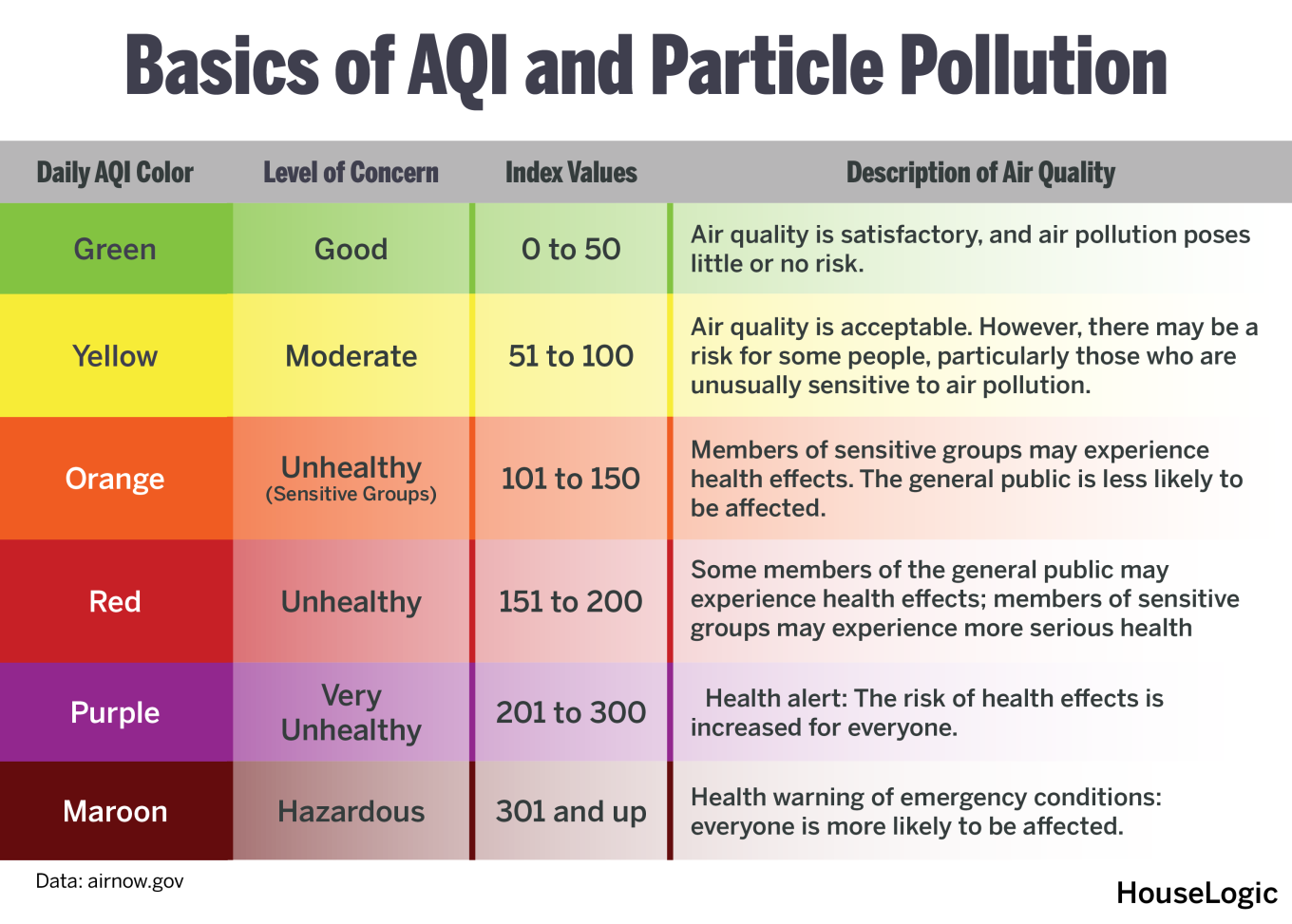
To arm yourself and your home against unhealthy air, gather information about risk in your area and actions to take when air quality is unhealthy or hazardous.
Urbaszewski recommends these websites:
After shutting your doors and windows, protect yourself from wildfire smoke by following these guidelines:
“A particle or air quality meter can tell you what’s going on inside a building,” says Mike Gallagher, president of Western Allied Corporation and a mechanical contractor in Santa Fe Springs, Calif. The cost is $99 to $3,000, depending on bells and whistles, "but the average homeowner just cares about the order of magnitude and whether they’re getting close to concern level," he says.
Air quality monitors can measure certain pollutants, including particulate matter of varying sizes (PM2.5 and PM10); volatile organic compounds, or VOCs; carbon dioxide; carbon monoxide; nitrogen dioxide; ozone; and even radon, according to "Consumer Reports." A good reading depends on the measurement scale your monitor uses. Some use the EPA's AQI for the community; others generate their own air quality score. Most smart air quality monitors indicate whether readings for pollutants, such as PM2.5 and volatile organic compounds, or VOCs, are concerning and fall outside of acceptable limits, "Consumer Reports" says.
If you have a furnace, air handler, or heat pump, you should change your filters every 30 to 90 days depending on use. Filters are calibrated on the Minimum Efficiency Reporting Value, or MERV, scale, which ranges from 1 to 20. The number indicates how well an HVAC filter captures airborne particles like dust, pollen, mold spores, pet dander, and bacteria.
A MERV 13 filter will stop a significant number of key particle sizes, Gallagher says. However, he recommends not using a MERV 13 filter all the time, because "it will catch every speck" and might create particle clogs and problems for the system. “It’s the right thing to use during the worst situation, like nearby wildfire smoke," he says.
Combine this with a MERV filter to absorb toxic gases and reduce odors, Gallagher says. “They have the ability to trap volatile organic compounds, so they’re useful immediately after a smoke event to help remove odors within the occupied space.”
This reduces allergens, purifies the air, and can be portable or part of a whole-house system. You can even DIY one. Some utilities offer rebates for air purifier systems, so check with your local utility provider.
Urbaszewski and Gallagher offer these tips if you're dealing with nearby wildfire smoke:
Unhealthy air quality and wildfire smoke are growing challenges, but you can take precautions and respond quickly to alerts and events to keep your family and home healthy.
Interested in more real estate tips? Feel free to contact me directly!
Providing a superior level of informed, professional real estate services to buyers and sellers throughout Central Minnesota. We have agents specializing in residential, commercial, multifamily, new construction, existing, investment properties, foreclosures/REO, and short sales with offices located in:
Multiple Office Locations To Serve YOU!
Saint Cloud 320-259-4554
Princeton 320-983-3555
Sartell 320-259-4554
Little Falls 320-259-4554
Minneapolis 763-565-2000
Hutchinson 320-455-9127
Litchfield 320-298-1140
Premier Real Estate specializes in MANY areas around Central MN including Saint Cloud, Waite Park, Rice, Royalton, Sartell,
Who Has the Upper Hand in Today's Housing Market?Ask around and almost every homebuyer out there wants to know if there’s a way to get a better deal. And just about every seller wants to know
How to Find the Right Neighborhood When You MoveHouse hunters can focus so much on a house they want that they unintentionally slight other aspects of a new location. Your new neighborhood is at
Less House, More Home: Why Smaller Homes Are Paying Off for Today’s BuyersYou started shopping with a specific mental image of your future home in your mind. Then the houses in your budget
Do You Still Need a Home Office?Dedicated home offices are transitioning from must-haves to maybes, as many employees spend more days at the workplace. The home office isn’t disappearing, but
 The data relating to real estate for sale on this web site comes in part from the Broker Reciprocity Program of the Regional Multiple Listing Service of Minnesota, Inc. Real estate listings held by brokerage firms other than Premier Real Estate Services are marked with the Broker Reciprocity logo or the Broker Reciprocity thumbnail logo (little black
house) and detailed information about them includes the name of the listing brokers.
The data relating to real estate for sale on this web site comes in part from the Broker Reciprocity Program of the Regional Multiple Listing Service of Minnesota, Inc. Real estate listings held by brokerage firms other than Premier Real Estate Services are marked with the Broker Reciprocity logo or the Broker Reciprocity thumbnail logo (little black
house) and detailed information about them includes the name of the listing brokers.
The broker providing these data believes them to be correct, but advises interested parties to confirm them before relying on them in a purchase decision.
© 2026 Regional Multiple Listing Service of Minnesota, Inc. All rights
reserved
By searching, you agree to the End User License Agreement.
Digital Millennium Copyright Act (DMCA) Notice
The Digital Millennium Copyright Act of 1998, 17 U.S.C. 512 (the "DMCA"), provides recourse for copyright owners who believe that material appearing on the Internet infringes their rights under U.S. copyright law. If you believe in good faith that any content or material made available in connection with our website or services infringes your copyright, you (or your agent) may send us a notice requesting that the content or material be removed, or access to it blocked. Notices and counter-notices should be sent in writing by mail to Michael Bisping, Director, Customer Relations, Regional Multiple Listing Service of Minnesota, Inc, 2550 University Avenue West, Suite 259S
Saint Paul, MN 55114 or by email to mbisping@northstarmls.com. Questions can be directed by phone to 651-251-3200.
