

Who Has the Upper Hand in Today's Housing Market?Ask around and almost every homebuyer out there wants to know if there’s a way to get a better deal. And just about every seller wants to know

Dated: May 22 2025
Views: 192
Published on May 8, 2025
You may have flood risk no matter where you live, but you have insurance options for peace of mind.
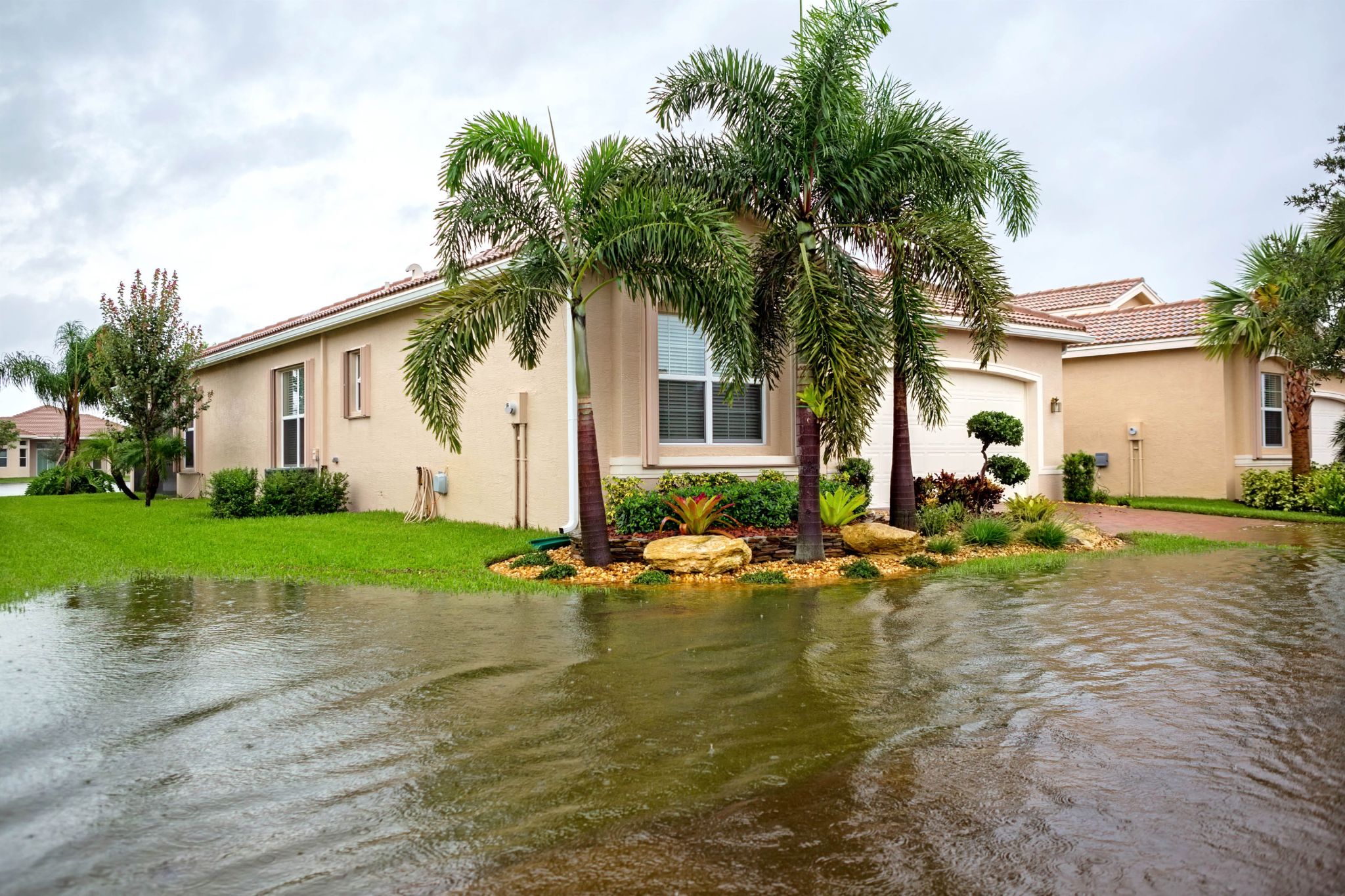
Just one inch of water in a home can cause up to $25,000 in damages, according to the Federal Emergency Management Agency. If you’re assuming homeowners insurance will pick up the tab, you may be in for a surprise. Payment for that costly clean-up bill may end up coming out of your wallet.
Many homeowners have learned the hard way that standard homeowner, condo, and renter’s insurance policies don’t cover flood damage. Hurricane Helene damaged an estimated 300 homes in Buncombe County, N.C., in 2024. Fewer than 1% of the homes and businesses had flood insurance, according to the Insurance Information Institute (Triple-I).
Nationwide, only about 4% of American households have a flood insurance policy. That's especially troubling given that the catastrophic flooding events in the U.S. are becoming more frequent and severe. “Americans are at risk of flooding, no matter where they live,” says Mark Friedlander, a spokesperson at Triple-I. “Lack of flood insurance is the largest insurance gap in the U.S.”
Homeowners who live in a high-risk flood zone, as defined by FEMA, are required to get flood insurance if they’re getting a government-backed mortgage. However, flood insurance is optional for those who don’t have a mortgage or don’t live in a so-called “high-risk area.” These homeowners must decide their risk tolerance and whether they need flood insurance, says Bill Leininger, a broker-owner of Dean and Leininger Real Estate in Bigfork, Mont. He is also a former chair of the National Association of REALTORS® Insurance Committee.
“Many people think if they don’t live in a coastal area like Florida, they don’t need flood insurance,” Leininger says. Yet, flooding events often occur beyond precise bounds, like the ones shown on a flood map.
Indeed, the purpose of FEMA’s widely used flood maps isn’t to show your property’s individual risk and whether you need flood insurance, says Austin Perez, senior policy representative for the NAR. Perez has long served as an advocate for greater flood protection for homeowners. He says FEMA maps often don’t account for inland flooding caused by heavy rainfall and don’t represent all areas.
Furthermore, an average of 40% of the claims processed by the National Flood Insurance Program — a federal program that sells flood insurance — come from FEMA high-risk flood zones.
More than 24 million properties in the U.S. are estimated to face flooding risk over the next 30 years, according to the First Street Foundation. Those properties aren’t solely located along the major rivers or the coastline mapped by FEMA. Heavy rainfall, melting snow, ice dams, drainage system backups, or even broken water mains can also cause flooding. There are ways you can weatherproof your home and yard to reduce damage. Some of the risk is beyond your control, however.
Is your home or the one you’re looking to buy at risk? Here are some resources to check:
After learning about the basics, you likely still need answers to questions before investing in flood insurance. Here are some common questions:
Standard home insurance excludes flood damage, such as from storm surges, flash floods, rising rivers, or heavy rain.
You're required to have flood insurance if you have a federally backed mortgage, such as a Federal Housing Administration or Veterans Affairs loan, and live in a high-risk flood zone, as determined by FEMA’s flood insurance rate maps.
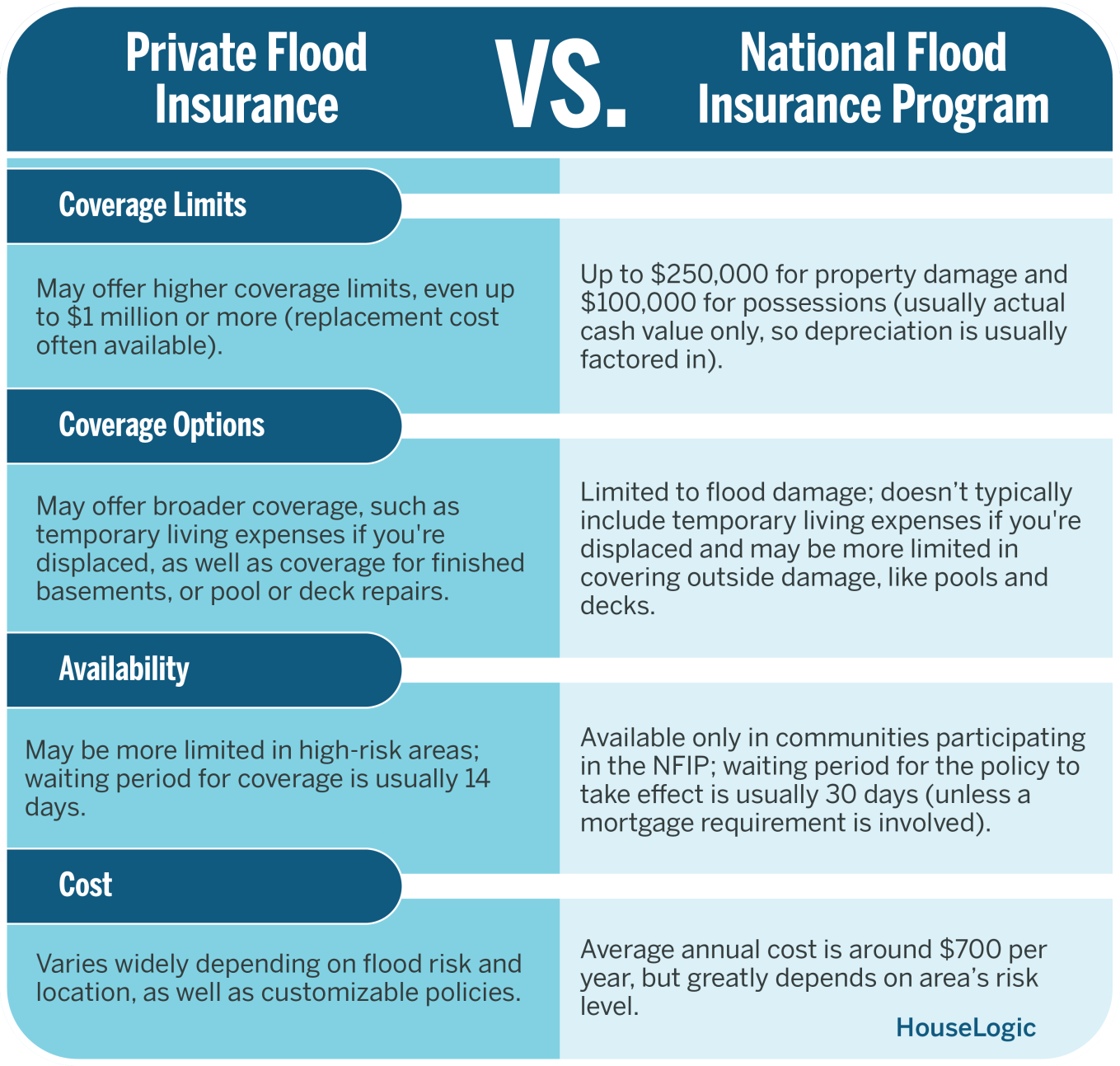
Homeowners can typically purchase flood insurance through the NFIP if their community is eligible or through private flood insurance companies. NFIP is the most common source. But the program does face challenges. In fact, Congress must reauthorize the NFIP by Sept. 30, 2025. Private insurers write about 10% of U.S. flood policies. This may be an option for homeowners seeking higher coverage limits and additional policy options, like additional living expenses. This would help pay for extra costs like hotel bills while a home is being rebuilt.
Costs can vary based on property-specific flood risk factors. They include distance to water, property elevation, the home's age and construction, coverage and deductible options, and cost to rebuild the home. The highest-cost policies are typically in coastal areas that tend to be at greater flood risk and could cost $1,000 or more per year. However, “the cost of flood insurance is very reasonable in most areas of the country,” Friedlander says. “For $50 to $75 a month, American homeowners can have peace of mind with financial protection for flood losses.” When shopping for flood insurance, gather multiple quotes from NFIP and private insurers to compare, he advises.
Policies can differ, particularly with private insurance. NFIP policies generally cover structural damage up to $250,000 and personal belongings, such as additional living expenses and outdoor structures such as fences, patios, and swimming pools. There is only partial coverage for basements. Private insurance policies may offer coverage for these items.
When you're deciding whether to go with private flood insurance vs. NFIP, compare these factors:
Flooding isn't exactly common in Southwest Montana. But in 2022, melting snow and heavy rainfall led to unprecedented flooding. Roads washed away, and flooding severely damaged homes. “We’re not in the coastal areas like Texas, Louisiana, and Florida. But as FEMA says, ‘where it rains, it can flood,’” Leininger says. That’s why he encourages home buyers and homeowners to always assess their risk. For example, they might talk to an insurance agent or plug in addresses at FloodSmart.gov.
Homeowners may have a knowledge gap. Talking to an insurance agent about flood insurance can fill that gap and bring peace of mind.
Interested in more real estate tips? Feel free to contact me directly!
Providing a superior level of informed, professional real estate services to buyers and sellers throughout Central Minnesota. We have agents specializing in residential, commercial, multifamily, new construction, existing, investment properties, foreclosures/REO, and short sales with offices located in:
Multiple Office Locations To Serve YOU!
Saint Cloud 320-259-4554
Princeton 320-983-3555
Sartell 320-259-4554
Little Falls 320-259-4554
Minneapolis 763-565-2000
Hutchinson 320-455-9127
Litchfield 320-298-1140
Premier Real Estate specializes in MANY areas around Central MN including Saint Cloud, Waite Park, Rice, Royalton, Sartell,
Who Has the Upper Hand in Today's Housing Market?Ask around and almost every homebuyer out there wants to know if there’s a way to get a better deal. And just about every seller wants to know
How to Find the Right Neighborhood When You MoveHouse hunters can focus so much on a house they want that they unintentionally slight other aspects of a new location. Your new neighborhood is at
Less House, More Home: Why Smaller Homes Are Paying Off for Today’s BuyersYou started shopping with a specific mental image of your future home in your mind. Then the houses in your budget
Do You Still Need a Home Office?Dedicated home offices are transitioning from must-haves to maybes, as many employees spend more days at the workplace. The home office isn’t disappearing, but
 The data relating to real estate for sale on this web site comes in part from the Broker Reciprocity Program of the Regional Multiple Listing Service of Minnesota, Inc. Real estate listings held by brokerage firms other than Premier Real Estate Services are marked with the Broker Reciprocity logo or the Broker Reciprocity thumbnail logo (little black
house) and detailed information about them includes the name of the listing brokers.
The data relating to real estate for sale on this web site comes in part from the Broker Reciprocity Program of the Regional Multiple Listing Service of Minnesota, Inc. Real estate listings held by brokerage firms other than Premier Real Estate Services are marked with the Broker Reciprocity logo or the Broker Reciprocity thumbnail logo (little black
house) and detailed information about them includes the name of the listing brokers.
The broker providing these data believes them to be correct, but advises interested parties to confirm them before relying on them in a purchase decision.
© 2026 Regional Multiple Listing Service of Minnesota, Inc. All rights
reserved
By searching, you agree to the End User License Agreement.
Digital Millennium Copyright Act (DMCA) Notice
The Digital Millennium Copyright Act of 1998, 17 U.S.C. 512 (the "DMCA"), provides recourse for copyright owners who believe that material appearing on the Internet infringes their rights under U.S. copyright law. If you believe in good faith that any content or material made available in connection with our website or services infringes your copyright, you (or your agent) may send us a notice requesting that the content or material be removed, or access to it blocked. Notices and counter-notices should be sent in writing by mail to Michael Bisping, Director, Customer Relations, Regional Multiple Listing Service of Minnesota, Inc, 2550 University Avenue West, Suite 259S
Saint Paul, MN 55114 or by email to mbisping@northstarmls.com. Questions can be directed by phone to 651-251-3200.
